
Physical Therapy is Almost Always The Best Treatment for Knee Pain
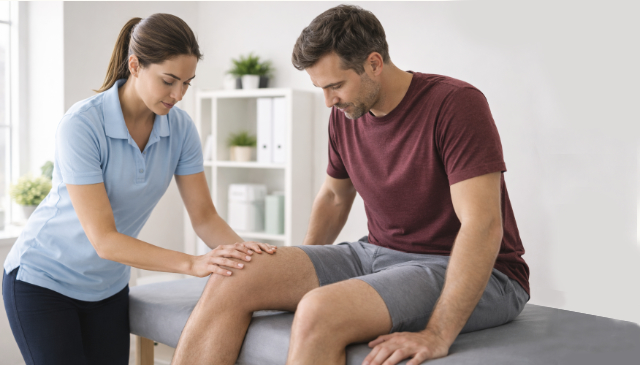
Knee pain is one of the most common musculoskeletal complaints across all age groups, and it can quickly begin to interfere with walking, work tasks, exercise, and even sleep when it is not addressed early. Research suggests that up to 1 in 4 adults report knee pain in a given year, with rates increasing in individuals with an injury history and those who put too much stress on their knees during work and/or recreation. For many patients, symptoms begin as mild discomfort that feels manageable at first, but then worsens over time if the underlying causes are not properly addressed.
Your knees play a central role in nearly every movement that involves your lower body, from getting out of a chair to navigating stairs, as well as lifting objects and participating in sports or exercise. If knee pain or discomfort develops, people often respond by limiting their activity or avoiding movement entirely. While short–term rest can certainly help calm irritation after an acute flare–up, extended periods of inactivity can lead to reduced strength and joint tolerance (the amount of strain the knee can handle). Over time, this pattern can make the knee more sensitive and less capable of handling normal daily demands.
Physical therapy remains one of the safest and most effective treatment approaches for many forms of knee pain, particularly when no serious medical concerns are present. A structured rehabilitation plan can improve strength, restore joint mobility, and rebuild confidence in movement. Many individuals are able to return to daily activities without the need for imaging, injections, or surgery when they begin appropriate care early and stay consistent with the process.
How the Knee Becomes Irritated or Injured
The knee joint connects the long thigh to the shin and relies on a complex interaction of ligaments, cartilage, muscles, and tendons to provide stability and control. The kneecap helps the quadriceps muscles generate force and improves the efficiency of movements such as climbing stairs or standing from a seated position. Even small changes in strength, flexibility, or coordination can increase the amount of stress placed on certain areas of the joint.
In many cases, knee pain develops because the load being placed on the joint is more than it capable of handling. This can happen when activity levels increase quickly, when strength decreases after a period of inactivity, or when movement patterns place uneven pressure on the joint. Some of the most common contributing factors include reduced joint mobility, weakness in the hips or thighs, and decreased control during walking, running, or landing. These issues are often highly responsive to targeted rehabilitation that gradually improves the knee's capacity to handle load.
Common Knee Conditions
Below are some of the most common conditions responsible for knee pain and how physical therapy can help for each one.
Patellofemoral pain
Pain around or behind the kneecap often worsens with stairs, squatting, or prolonged sitting. This condition is frequently associated with reduced strength or control in the hips and thighs, which can increase pressure on the front of the knee. Physical therapy focuses on strengthening the surrounding muscles and improving movement patterns, which help the kneecap to track more smoothly during activity.
Meniscus irritation or tear
The meniscus serves as a cushion within the knee joint. Degeneration or injury can lead to joint pain, stiffness, and swelling. Many meniscus injuries respond well to exercise–based treatment, especially in middle–aged and older adults. Research has shown that structured rehabilitation can produce outcomes similar to surgery for many people who do not have severe mechanical symptoms that block movement.
Knee osteoarthritis
Osteoarthritis occurs when joint cartilage gradually thins and surrounding tissues become more sensitive. Symptoms often include stiffness, swelling, and discomfort during weight–bearing activity. Exercise is typically recommended as a first–line treatment, with strong evidence supporting strengthening and mobility work to improve function and reduce pain. Maintaining activity helps the joint tolerate daily loads more effectively.
Ligament sprains
Injuries to ligaments such as the ACL or MCL often occur during sports that involve sudden directional changes. Swelling and instability may follow. Physical therapy helps restore strength, coordination, and joint control. For some individuals, especially those with lower activity demands, structured rehabilitation can provide sufficient stability without surgery.
Quadriceps or patellar tendon pain
Tendon–related knee pain is common among active individuals who jump, run, or rapidly increase training volume. The tendon becomes sensitive when it is overloaded beyond its current capacity. Progressive strengthening and careful load management through physical therapy can improve tolerance and reduce symptoms over time.
Red Flags: When Knee Pain Requires Medical Evaluation
Most knee pain improves with physical therapy, but some symptoms suggest that a medical evaluation is needed before beginning rehabilitation. These signs may indicate a more serious injury or condition that requires prompt attention.
The following symptoms are considered red flags for knee pain:
- Inability to bear weight after an injury
- Visible deformity of the joint
- Rapid swelling following trauma
- Fever, redness, or warmth around the knee
- Persistent pain at rest or during the night
- Locking that prevents the knee from fully bending or straightening
- A history of cancer with new, unexplained bone pain
If any of these symptoms are present, it is best to contact your physician or visit an urgent care provider before starting an exercise program.
Why Physical Therapy Is Effective for Knee Pain
Physical therapists focus on identifying and correcting the movement patterns that contribute to knee irritation. An evaluation typically includes observing how you walk, squat, balance, and change direction, along with assessing strength, flexibility, and joint mobility. This information helps guide a treatment plan tailored to your specific needs and goals.
A rehabilitation program often includes strengthening for the hips and legs, mobility work to restore joint motion, balance and coordination training, and education on gradually returning to activity. Guidance on managing activity levels and avoiding sudden spikes in load is also important. This combination helps the knee become more resilient over time rather than simply less painful in the short term.
Research supports exercise–based care across many knee diagnoses, including osteoarthritis, patellofemoral pain, and post–injury recovery. Structured programs reduce pain, improve function, and help people return to meaningful activities. Active treatment also provides tools that patients can continue using independently, which supports long–term joint health.
March 3, 2026
Disclaimer:
The information in the articles, posts, and newsfeed is intended for informational and educational purposes only and in no way should be taken to be the provision or practice of physical therapy, medical, or professional healthcare advice or services. The information should not be considered complete or exhaustive and should not be used for diagnostic or treatment purposes without first consulting with your physical therapist, occupational therapist, physician or other healthcare provider. The owners of this website accept no responsibility for the misuse of information contained within this website.
